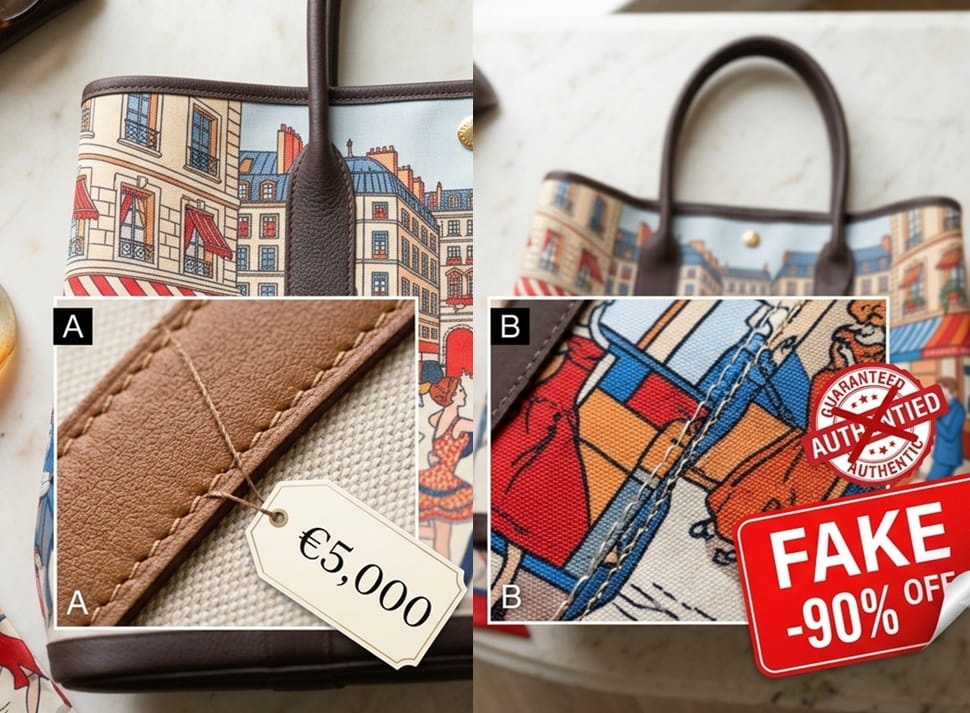




Anatomy of a Counterfeit, No. 2:
How Chinese Sellers Mask Replicas of the Iconic Prada Crochet Tote
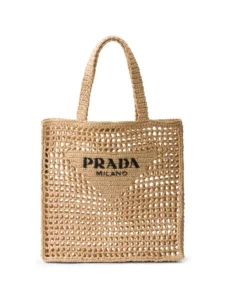
In the world of luxury fashion, few brands can create a product so highly coveted yet effortlessly minimalist as the house of Prada. A perfect example of this is the Prada Crochet Tote Bag – a lightweight, woven shopper that has remained a summer must-have for influencers and premium fashion lovers worldwide for several seasons. Crafted from exquisite raffia, it features a loose-knit weave and a prominent, embroidered “Prada Milano” logo on the front. This iconic model (available on platforms like Farfetch) comes with a hefty price tag, averaging between €1,400 and €2,000 depending on the colorway and size. However, its high price and massive popularity have made it one of the most heavily counterfeited accessories in recent years.
The Illusion on Chinese Platforms:
"Paris Milano" Instead of the Original?
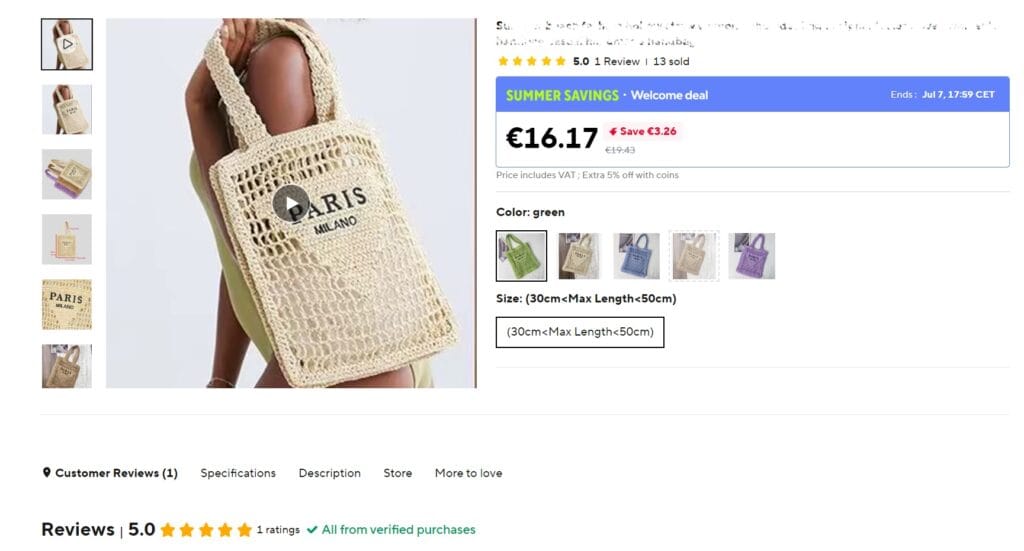
When browsing popular Chinese e-commerce platforms, it is incredibly easy to stumble upon listings that look virtually identical to Prada’s cult-favorite basket bag. Yet, a subtle difference is visible in the main product photos uploaded by the sellers. Instead of the legendary “Prada Milano” lettering, the knit features an embroidered phrase like “Paris Milano” or other random modifications of the brand’s name.
To an inexperienced consumer, this might look like a standard, legal “inspired” item, a product that merely references the design of a luxury fashion house without infringing on copyrights, since it avoids using the registered trademark. However, this is nothing more than a deliberate deception and a clever defense mechanism against algorithms designed to block illegal goods.
The Truth Lies in the Review Section
Chinese sellers know exactly how to bypass e-commerce platform security systems that automatically remove listings featuring counterfeits of well-known brands. Changing the text to “Paris Milano” in the main photo allows them to keep their listings online and evade bans.
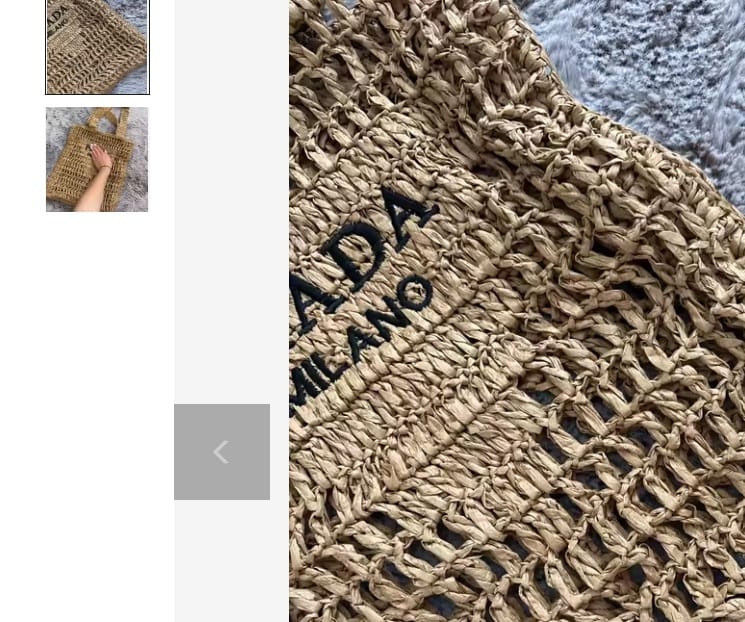
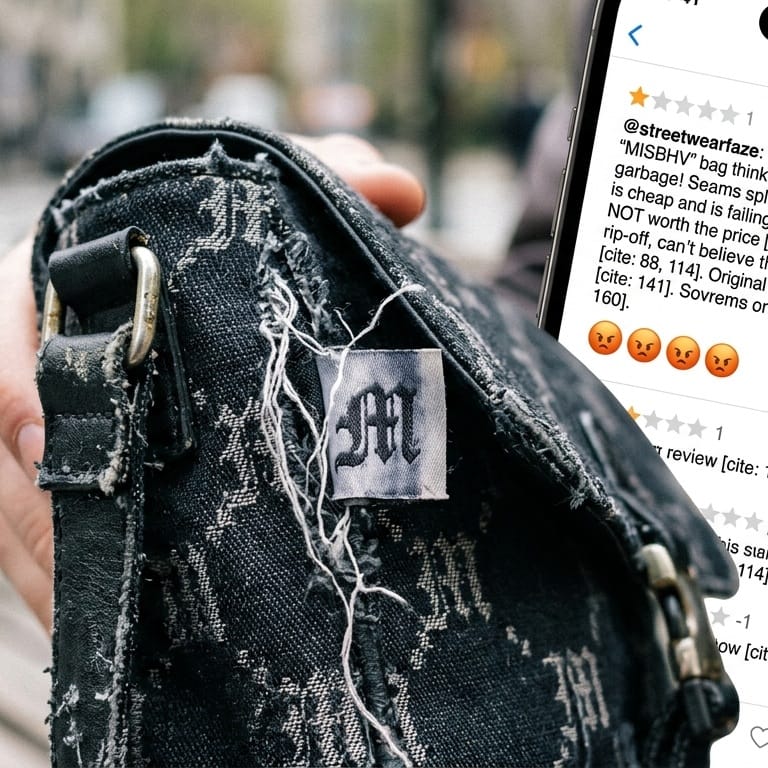
The true nature of this practice is only exposed when you look at the customer reviews and feedback section. It is right there, in the photos uploaded by actual buyers, where the harsh reality becomes clear. The ordered bags have absolutely nothing to do with the “decoy text”.
Insights Summary
This tactic serves as a warning to consumers and a vital lesson on the modern counterfeit market. By manipulating catalog photos, counterfeiters can sell replicas on a massive scale under the guise of “inspired” products. When buying such an item, consumers are often not supporting an alternative brand; instead, they are directly participating in the trade of illegal goods and fueling the shadow economy.