




Anatomy of a Counterfeit, No. 5:
The Flattery Trap: Is Being Mass-Copied a Luxury Brand’s Ultimate Praise or Financial Nightmare?
Is being mass-copied a badge of honor for an established European fashion brand? Or does it drive the Chief Financial Officer straight to despair?
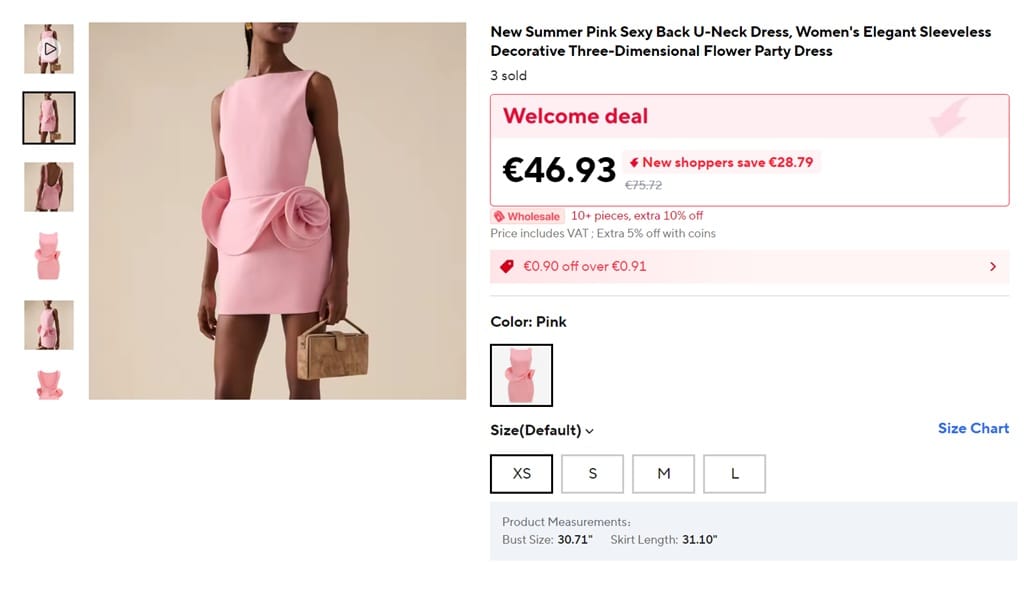
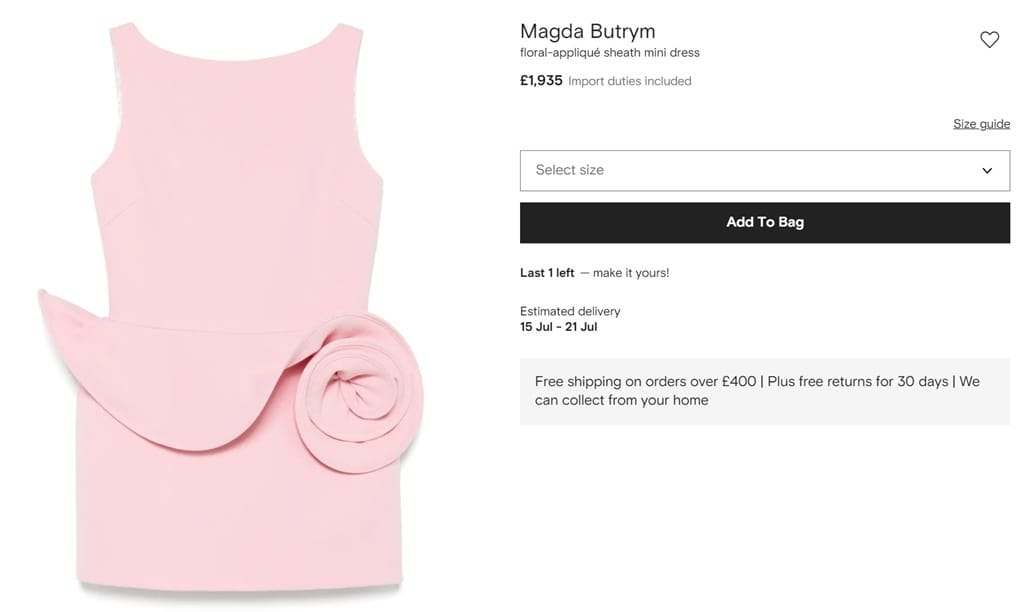
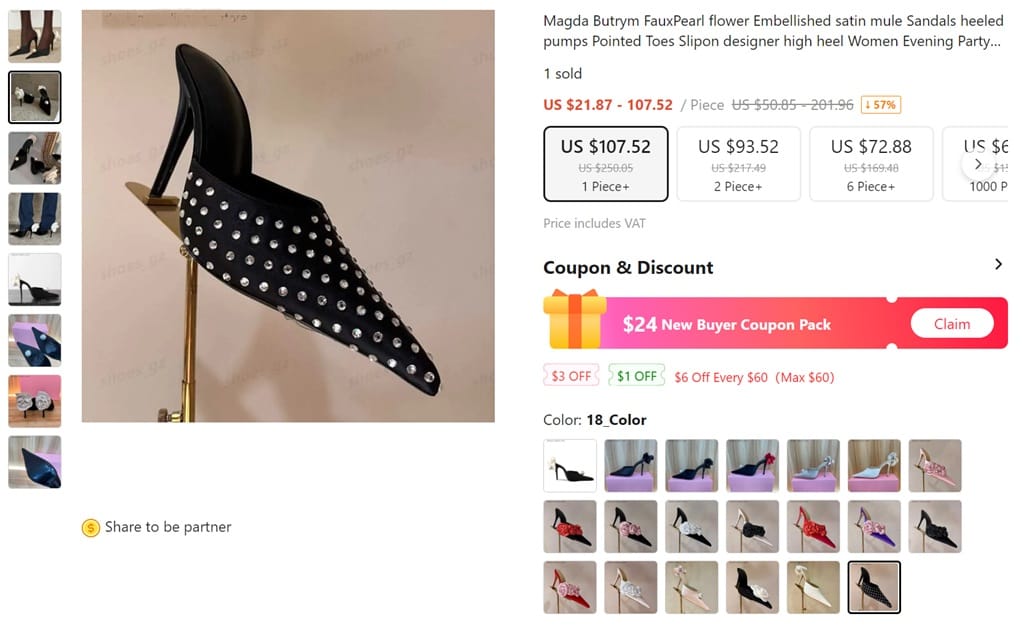
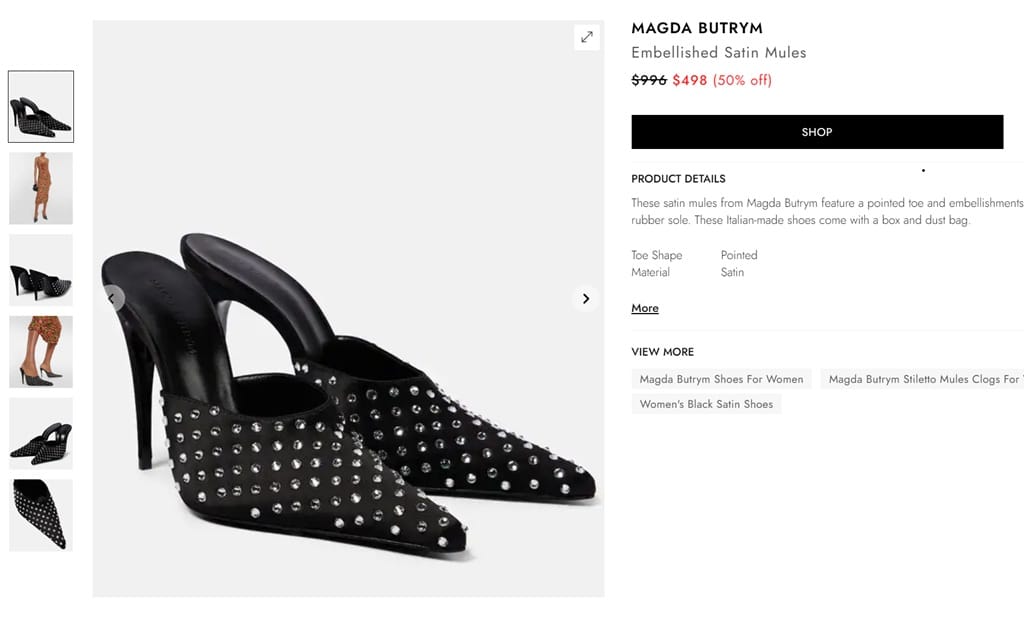
There are brands that, despite not matching the turnover of the industry’s largest fashion houses, are visibly overrepresented on platforms offering “cheaper versions” mass-produced in China.
A fascinating case in point is the leading Polish fashion house, Magda Butrym. At any given moment, you can find dozens of listings for various pieces from the Polish designer’s collections.
Sellers brazenly exploit the brand name and copy her designs with varying degrees of accuracy.
Brand name in the description? Checked.
Branded box included? Of course.
Embossed logo on the sole? Absolutely.
The quality of the original? Not by a long shot.
Looking closely at these “alternatively authentic” product listings, one can’t help but wonder how this truly impacts the brand. On one hand, their widespread availability is a testament to the immense demand for the brand. It is undeniably a stamp of global success. Furthermore, counterfeits of Magda Butrym’s designs are noticeably more expensive than other replicas on the market. Could it be that even design thieves are captivated by Mrs. Butrym’s original sketches?
On the other hand, we must answer two critical questions:
Will a core customer who wears Magda Butrym on a daily basis intentionally buy a cheap counterfeit from China? Highly unlikely. They will shop at the brick-and-mortar boutique in Warsaw or on magdabutrym.com.
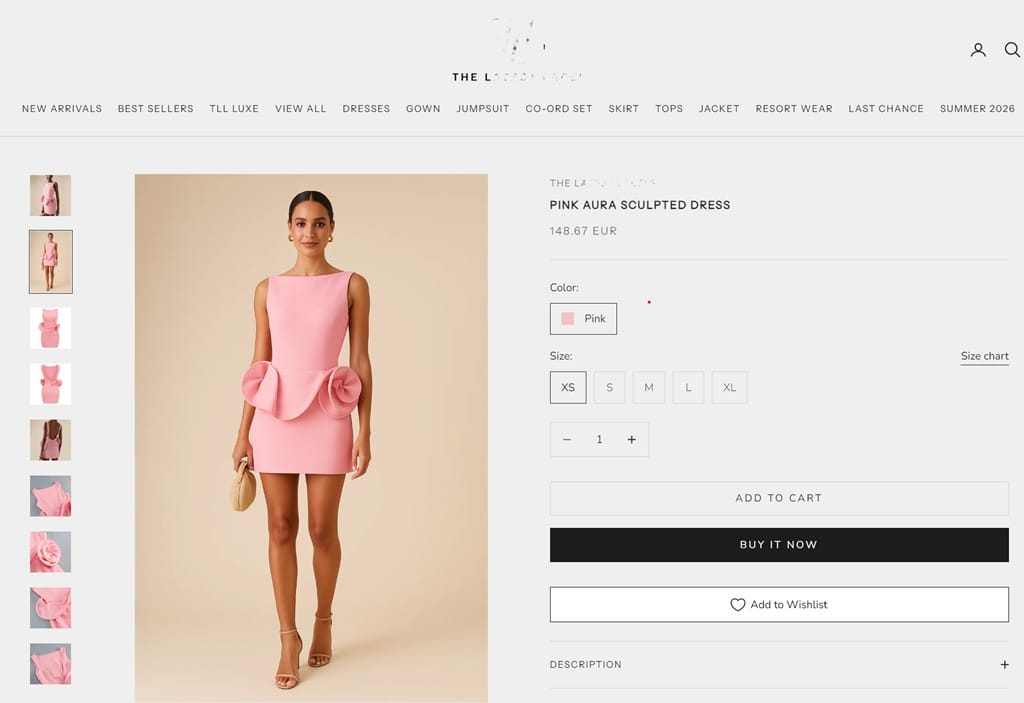
However, will an aspirational customer looking for “that beautiful floral dress” stumble upon European online or physical stores offering identical patterns? Here, it is a 50/50 coin toss.
Insights Summary
The Veblen Effect Paradox & The "Premium" Counterfeit Market
In classical economics, luxury goods gain value in the eyes of consumers as their prices increase (the Veblen effect). The fact that Magda Butrym replicas command a higher price tag than average counterfeits on the market is a unique phenomenon. It demonstrates that the intellectual and aesthetic value of the design (the brand’s DNA) is powerful enough to dictate a premium price even in the shadow economy. Design thieves aren’t just cloning a product, they are capitalizing on a prestige that allows the replica market to charge a higher margin. For a Creative Director, this is the ultimate proof that the brand is actively shaping trends rather than just chasing them.
Debunking the "Direct Revenue Loss" Myth (The Replacement Customer Illusion)
The CFO can breathe a sigh of relief in one specific area: the counterfeit market in China does not directly cannibalize the brand’s core customer base. A loyal Magda Butrym client purchases status, a premium shopping experience, superior material quality, and absolute authenticity. This demographic will never intentionally substitute that with a cheap replica. From a financial standpoint, counterfeit sales volume does not translate 1:1 into lost revenue for the fashion house, as replica buyers would generally not pay full retail price for the original anyway.
The Genuine Threat: The "Look-alike" Gray Area in the European Market
The most alarming takeaway lies within the 50/50 scenario mentioned in the article. The real danger to the brand’s finances is not the customer knowingly purchasing a counterfeit, but rather the aspirational consumer seeking a specific aesthetic (such as the brand’s signature 3D floral motifs). If European high-street fast-fashion chains or independent boutiques (often operating just within legal bounds by making minor alterations to cuts) flood the market with identical designs, it triggers two highly damaging phenomena:
Loss of the "Marginal Customer"
An individual who might have saved up to invest in a single, original piece from the designer ends up buying a highly similar item locally at a fraction of the cost, often completely unaware that it is a rip-off of an independent designer’s work.
This segment, the aspirational consumer, is financially critical for independent luxury houses. Unlike ultra-high-net-worth individuals, these marginal customers view a luxury purchase as a milestone investment, buying perhaps one statement piece a year. However, when high-street fast-fashion chains or mid-tier contemporary brands replicate the designer’s signature aesthetic, they close the “aspirational gap” prematurely. The consumer satisfies their desire for that specific look instantly and cheaply.
The financial damage here is twofold: not only is a high-margin sale directly diverted away from the fashion house, but the brand also loses the opportunity to convert a passionate, rising consumer into a lifelong loyal client. Furthermore, because these look-alikes are bought legally on the European market, this conversion failure happens entirely under the radar of traditional anti-counterfeiting legal frameworks.
Erosion of Exclusivity (Visual Brand Devaluation)
When a brand’s unique visual signature becomes ubiquitous on European streets in low-quality iterations, it strips the brand of its luxury allure. This widespread dilution leads to a severe visual devaluation of the entire brand ecosystem. Luxury is fundamentally anchored in scarcity and social signaling; once a signature design element, such as Magda Butrym’s 3D floral motifs or a historic leather weave, is easily spotted in every low-cost retail corridor, the original item loses its ability to signal exclusivity. The core, high-net-worth clientele instantly experiences “luxury fatigue” and abandons the brand to avoid being associated with mass-market replicas.
This is not just a theoretical marketing risk, it is a financial reality that can bring down global giants. A prime example is Gucci, which over-relied on a high-visibility, logo-heavy aesthetic and openly flirted with the counterfeit culture through ironic collections. The resulting over-saturation led to severe visual dilution, causing their traditional, ultra-wealthy customers to flee toward more discreet, “quiet luxury” brands. The financial blow was catastrophic: Gucci’s revenues plummeted by over 20% in a single fiscal year, forcing its parent company, Kering, to undergo drastic cost-cutting measures, execute high-profile creative restructurings, and permanently close approximately 100 retail boutiques worldwide—including their iconic flagship store at Vitkac in Warsaw. For an independent fashion house, a blow of this magnitude would be fatal.
Legitam Insights Preview
The cautionary tale of Gucci, how its aggressive chase for mass-market hype and logo ubiquity ultimately backfired into a multi-billion-dollar lesson in luxury dilution is a complex phenomenon. We will dive deep into the specific mechanics of Gucci’s strategic missteps, financial losses, and subsequent retail retrenchment in upcoming editions of Legitam Insights.